
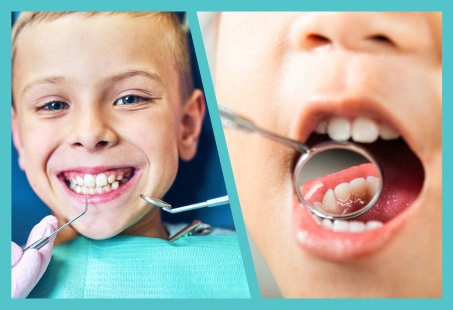
A child’s oral health plays a vital role in their overall well-being. While some dental issues may be dismissed as just a normal part of growing up, a dentist warns that certain symptoms should never be ignored. These seemingly minor signs could point to serious, and potentially dangerous, underlying health conditions— so it’s always best to consult your dentist for timely evaluation and care.
According to Dr Gizem Seymenoglu, an independent dentist whose services are accessible through Longevita, here are the 6 oral health signs to look out for that may have serious consequences if ignored.
Peg-Shaped Teeth
“Normal teeth do not usually look like pegs, so be aware if your child’s teeth look like small inverted triangles,” noted the GDC-registered dentist with a decade of experience.
“A possible cause can be congenital syphilis, which can cause Hutchinson’s teeth. It can make the teeth appear peg-shaped with wide spaces between them. Such teeth also have a crescent-like notch on the biting surface.
Also, the molars may appear to have abnormally bumpy elevations, resembling a mulberry, which is why they are specifically referred to as Mulberry molars.”
Dr Gizem further explained that peg-shaped teeth can occur in association with certain other health conditions, such as Down’s syndrome, ectodermal dysplasia or William’s syndrome.
“It’s also possible that your child simply inherited these teeth from you or your partner, but it’s always best to be sure.”
Translucent Teeth
Dr Gizem said: “If your child’s teeth look transparent or translucent, something is definitely wrong with them.
It can be caused by a variety of conditions, one of which is enamel hypoplasia. Basically, it’s a developmental defect that results in a deficient or defective enamel, thus making the teeth more susceptible to decay. Its causes are varied, some of which include genetic disorders, celiac disease, liver disease, kidney disease, infection, trauma, and toxic chemical exposure.
Dentinogenesis imperfecta could be another explanation. It’s a rare disorder in which genetic mutations affect the normal development of dentin (a layer of hard tissue beneath the enamel that forms the majority of the tooth). Aside from making the teeth appear translucent, this condition can also discolour them bluish-grey or brown to yellow.”
In addition, the expert pointed out that there might be a simpler explanation. “Sweet and acidic foods can cause enamel erosion. Candy and fizzy drinks are obvious culprits, but fruit juices can also erode enamel, causing teeth to appear transparent.”
Missing Teeth
Dr Gizem explained: “Children can be born with missing permanent teeth — either a few or even all of them. This is known as tooth agenesis.
It can make it difficult for your child to speak and eat normally, and the teeth may have to be artificially replaced with medical devices like implants, bridges or dentures.”
Regarding the potential causes of this dental anomaly, the dentist noted that this can be inherited from the child’s parents, as well as occur in association with genetic disorders like Down’s or ectodermal dysplasia.
However, its causes can also be environmental, such as trauma, infection and exposure to toxic drugs.
Fracture-Prone Teeth
“A calcium deficiency can make teeth weaker, brittle and more vulnerable to fracture, which is true for children and adults alike.
You need calcium to maintain healthy enamel and gum tissue. But when you or your child has a calcium deficiency, whether because of vitamin D deficiency, poor diet or a health condition like a thyroid or kidney issue, the teeth become more vulnerable to cavities. Also, tooth loss is possible, so you must take it seriously,” said the dentist
Abnormally Small Teeth
Dr Gizem said: “If your child’s teeth are unusually small, it might be due to a condition called microdontia, which can be caused both by genetics and environmental factors.”
The expert noted that teeth in microdontia can also appear peg-shaped with noticeable gaps between them. Additionally, teeth alignment issues can be present.
“Children may be less confident about the shape and appearance of their teeth in such cases, but this condition can also affect their ability to pronounce words clearly or chew food properly, which is why dental intervention might be necessary.”
Dry Mouth
The dentist said: “It might seem that a dry mouth is not as serious as some of the other oral health problems, but it increases the risk of decay, infection and gum disease. Additionally, it can make your child’s breath smell bad.
Dry mouth can be symptomatic of a troubling condition called pediatric Sjögren’s, which is an autoimmune disorder targeting the moisture-producing glands in the body — including the salivary glands.”
Dr Gizem explained that besides affecting speech and swallowing, this condition can have other serious consequences, including fatigue, joint issues, and dry eyes and skin, among others.
A dry mouth can also be caused by factors such as dehydration or mouth breathing, according to the dentist, but a proper diagnosis is necessary.
